Hey y'all. You may have read about my involvement with an ALA accredited equity case in Milwaukee: Then they rescinded the offer. I have a string of expletives a mile long. This chaos cost me the roof over my head, the earning potential for my family and provides another example of the high scrutiny Black female leaders endure, where the goal is to wield “an ugly and effective weapon to blunt the power of Black women, to suggest through word and attitude that she will never be enough, that she will never belong in the halls of power. ” But let's direct our focus on my response to the utter dumpster fire my life has blazed into because I chose to lead in my profession...again. 1. Degree biases and inequity. Saying that only ALA accreditation degree holders apply enforces a higher educational expense , shows an outward prejudice against near identical degree coursework and conflicts with an integral belief that librarians embrace: intellectual freedom, because it...
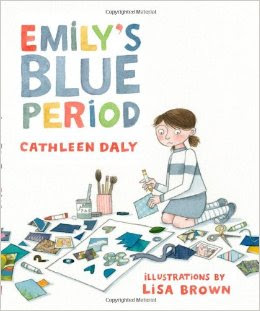
So I've come across the book Emily's Blue Period by Cathleen Daly with illustrations by Lisa Brown. It's a clever combination of my favorites: art, family, heart-felt emotions and perseverance. Without giving away too much Emily goes through a "blue" period to mimic her temporary obsession with Pablo Picasso (1881-1973) and to counteract the upheaval in her family. On a personal aside, I LOVE Picasso. Who else but he could divide his work into these distinct periods: The Blue Period (1901-1904), which were sad looking paintings using blue and blue-green colours. The Rose Period (1905-1907), which was a more happy style with orange and pink colours. The African- influenced Period (1908-1909) and The Cubism Period (1909- 1919). In my 30 seconds Book Talk : Emily's a young artist. She's impressionable in ways that make her uniqueness shine bright. However, she begins to mimic famed artist Pablo Picasso's "blue period" just when...
Here's an interesting fact: 🎙️Women = 70% of teachers globally (UNESCO, 2023), yet they hold less than 25% of leadership roles in tech (World Economic Forum, 2024). When we zoom in on AI leadership, the numbers drop even further— only 12% of AI researchers and 16% of AI faculty positions are held by women (Stanford AI Index, 2023). Think about this as it relates to WHO controls the narrative on women's involvement with AI? In my thousands of hours of research in generative artificial intelligence (gAI), there's a glaring bias and misrepresentation of female voices. Don't just believe my word for it, take a look at these articles: There Is No Standard: Investigation Finds AI Algorithims Objectify Women's Bodies Artificial intelligence in education: Understanding its impact and ethical implications in K-12 learning environments. Are AI Hiring Tools Racist or Ableist? If you let the data tell it, "this is a man's world." But as the r...


Comments
Post a Comment